Slide

AGING MECHANISM RESEARCH

To apply the knowledge of aging biology to actual aging interventions and develop innovative anti-aging strategies to effectively counteract the effects of time on the human body.

1 241029144Q3235

The Complex Journey of Aging

Aging is a multifaceted process resulting from complex changes in biological functions, ranging from DNA damage accumulation to protein dysfunction and altered intercellular communication. Our research focuses on deciphering these mechanisms at genomic, cellular, and systemic levels. This is the fundamental step towards identifying effective strategies to slow aging and enhance healthy lifespan.

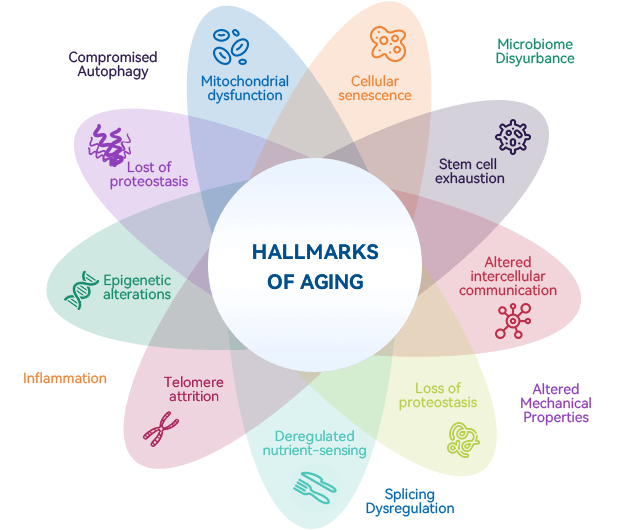
Hallmarks of Aging

Aging is driven by various biochemical changes occurring at different organismal levels, from molecular to systemic. Lopez-Otin and colleagues, in their influential 2013 publication in Cell, identified nine hallmarks of aging, which have become central to aging research and intervention. These hallmarks include Genomic Instability, Telomere Attrition, Epigenetic Alterations, Loss of Proteostasis, Deregulated Nutrient Sensing, Mitochondrial Dysfunction, Cellular Senescence, Stem Cell Exhaustion, and Altered Intercellular Communication. For more details, please refer to the original paper at Cell.

https://doi.org/10.1016/j.cell.2013.05.039

1 241029144J91G

Comprehensive Research Approach

At CELFULL, our approach involves conducting extensive research on various aging regulatory mechanisms. We identify and detect biomarkers related to aging, design interventions for specific aging pathways, construct models of aging-related diseases, and evaluate the effectiveness of these aging intervention strategies.

Floor002709 01

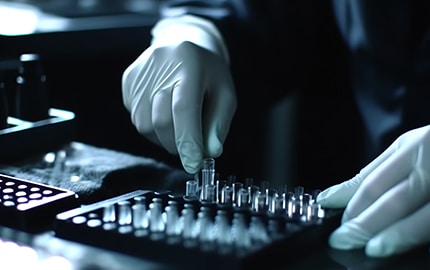
Detection of aging biomarkers
Floor002709 02

High throughput screening of active molecules

Floor002709 03

Computer-aided drug design

NAD+: The Fountain of Youth

Discovered in 1904 by British biochemist Sir Arthur Harden in Saccharomyces cerevisiae, NAD+ was initially recognized as a coenzyme in redox reactions before its signaling molecule role was identified. NAD+ is intricately linked to all aging hallmarks and its levels in human tissues diminish with age.

NAD+ is vital for cellular metabolism and homeostasis and plays a critical role in regulating the aging process. Numerous preclinical studies have shown that declining NAD+ levels contribute to increased disease susceptibility and aging.

Conversely, administering NAD+ precursors (like NMN, NR, NA, NAM) in model animals has shown improved health and extended lifespan. Restoring NAD+ levels is thus seen as a promising anti-aging intervention, potentially mimicking the effects of calorie restriction, a recognized anti-aging method.

NAD+: The Fountain of Youth

Discovered in 1904 by British biochemist Sir Arthur Harden in Saccharomyces cerevisiae, NAD+ was initially recognized as a coenzyme in redox reactions before its signaling molecule role was identified. NAD+ is intricately linked to all aging hallmarks and its levels in human tissues diminish with age.

NAD+ is vital for cellular metabolism and homeostasis and plays a critical role in regulating the aging process. Numerous preclinical studies have shown that declining NAD+ levels contribute to increased disease susceptibility and aging.

Conversely, administering NAD+ precursors (like NMN, NR, NA, NAM) in model animals has shown improved health and extended lifespan. Restoring NAD+ levels is thus seen as a promising anti-aging intervention, potentially mimicking the effects of calorie restriction, a recognized anti-aging method.

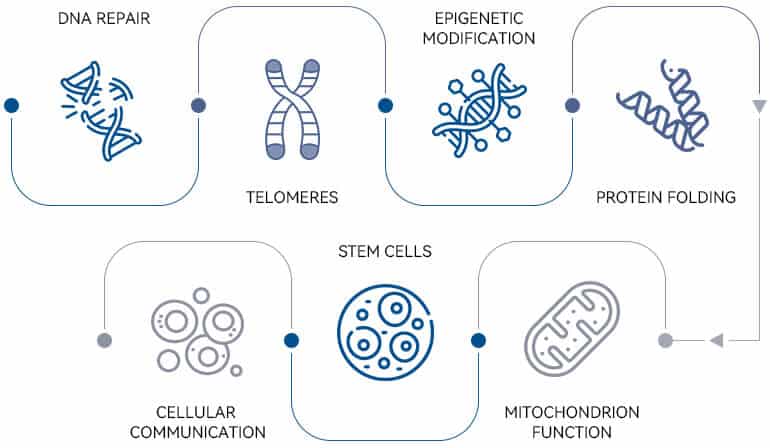
NAD+and 9 major signs of aging

RighInfo002311 yuan
  • RighInfo002311 icon1
    Deregulated
    nutrient-sensing
  • RighInfo002311 icon2
    DNA damage
  • RighInfo002311 icon3
    Telomere attrition
  • RighInfo002311 icon4
    Epigenetic alterations
  • RighInfo002311 icon5
    Mitochondrial dysfunction
  • RighInfo002311 icon6
    Stem cell exhaustion
  • RighInfo002311 icon7
    Cellular senescence
  • RighInfo002311 icon8
    Altered cellular
    communication
  • RighInfo002311 icon9
    Loss of
    proteostasis

The Importance of NAD+

01
NAD+ is the scientifically proven anti-aging factor with ability to repair DNA damages, activate longevity proteins
02
NAD+ is a naturally existing coenzyme in all living cells and regulates hundreds of reactions
03
The level of NAD+ declines with age, resulting in aging and increase of susceptibility to diseases
04
The effects of extending life-span via NAD+ metabolism regulation have been proven in various model animals
05
NAD+ metabolism pathways as therapeutic targets has been investigated in various disease models
06
Clinical studies have demonstrated the safety and efficacy of NAD+ precursors (such as NMN, NR) in human