Slide

PRODUCTS EVALUATION AND CLINICAL RESEARCH

We strive to deepen our understanding of the cellular biology driving the aging process, with the aim of translating these insights into effective, real-world aging intervention applications.

PRODUCTS EVALUATION PLATFORM

The Products Evaluation Platform is committed to ensuring the effectiveness and safety of both raw materials and finished products. This is achieved through a variety of testing methods, including physical and chemical tests, cell assays, zebrafish assays, and chick chorioallantoic membrane assays. These methods are applied across the product’s lifecycle to continuously monitor and enhance product quality.

20260701140930 863 552

Physics and Chemistry Lab

The physics and chemistry lab is instrumental in characterizing the physical and chemical properties of raw materials and products. By employing diverse instruments and techniques, the lab ensures the purity, stability, and potency of these materials and products.
20260701140929 862 552

Cell Assays

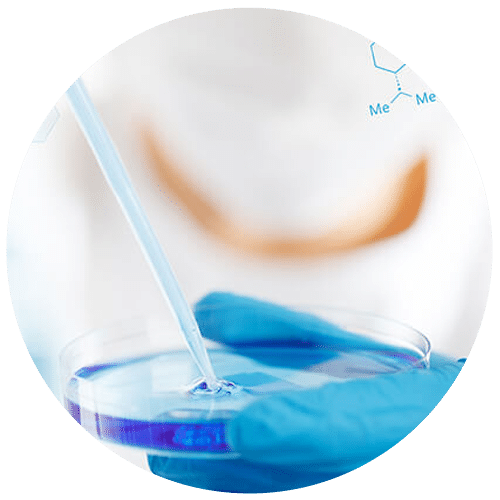
Cell assays play a crucial role in assessing the impact of active compounds on various elements of cell biology. These include mitochondrial functions, gene expression, redox balance, telomere integrity, and more. These assays offer valuable insights into the action mechanisms, toxicity, and effectiveness of these compounds.

20260701140928 861 552

Zebrafish Assays

Zebrafish assays are conducted to evaluate the tolerance, safety, and functional aspects of anti-aging interventions using model animals. These aspects cover a broad range, including metabolism, inflammation, digestive system health, skin condition, and physical performance.
1 241029141254533

Chick Chorioallantoic Membrane Assays

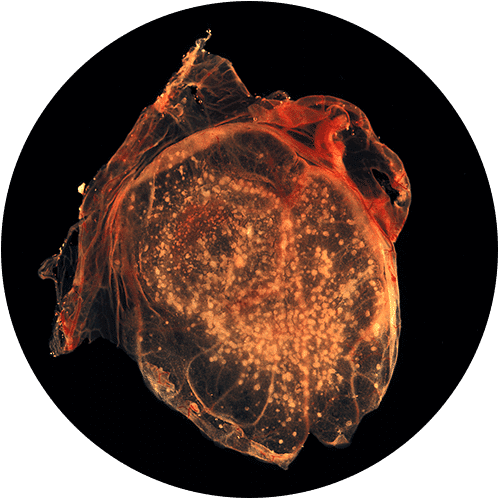
Chick chorioallantoic membrane assays, specifically, are employed to test eye irritation and corrosivity of cosmetics.

CLINICAL RESEARCH PLATFORM

The Clinical Research Platform is centered around assessing the effects of anti-aging interventions on the human body. This encompasses studies on pharmacokinetics, pharmacodynamics, tolerance, and safety, conducted through randomized, placebo-controlled, parallel-design trials. The outcomes of these clinical trials are fundamental in supporting the development of anti-aging products, whether as medicines or dietary supplements. To date, CELFULL and its partners have successfully completed multiple clinical trials.

CLINICAL STUDIES

Effect of NMN and exercise on middle-aged and elderly people

Randomized double-blind, placebo- controlled trial

Real-world NAD+ disparity and NAD+dynamics
The full name of NAD+is oxidized nicotinamide adenine dinucleotide.

hebelab

Hebe Lab is committed to building a global anti-aging integration technology platform. Leveraging existing aging intervention technology, the lab conducts real-world research to develop systematic anti-aging solutions. The ultimate goal is to reverse physiological aging, restoring the vitality of the 60s to that of the 30s.

STAGES

  • 01
    1 240Q21G1125T

    Technique Foundation of Aging Intervention

  • 02
    1 240Q21G12Y37

    Real-world Research of Aging Intervention

  • 03
    1 240Q21G13R14

    Extention Research of Aging Intervention

1 241029141416327

Knowing NAD+ levels both in biology samples and human body

The importance of NAD+ in maintaining youth and health has been extensively documented by research groups worldwide. Assessing NAD+ levels and dynamics from mitochondria, cells, tissues, organs, and human serum is pivotal for further exploring NAD+ metabolism. Quantifying these levels and understanding their relationship with aging enables precise and personalized aging intervention through NAD+ regulation.

NAD+ Biosensor Technology

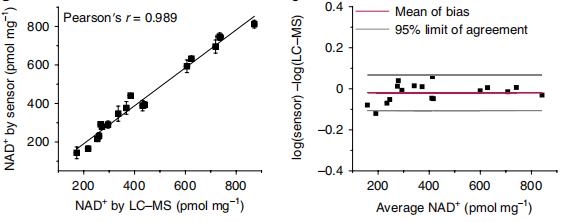
Human NAD+ levels are detected using a semi-synthetic NAD+ biosensor, requiring only 5 milliliters of fingertip blood. This biosensor is suitable for various biological samples like blood, saliva, and cell lysate. Its detection sensitivity is comparable to LC-MS, the gold standard for NAD+ concentration detection, but offers more convenient sample preparation, quicker detection, and lower cost. The NAD+ biosensor can be integrated into either a tabletop or a portable device, and its research has been published in notable journals like Science and Nature Metabolism.

1 241029141354M6
1 2410291413314Z

Bioluminescence Resonance Energy Transfer (BRET) for NAD+ Detection

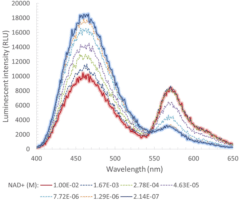
The principle of bioluminescence resonance energy transfer (BRET) is employed for NAD+ concentration detection. When the NAD+ response protein binds to an NAD+ molecule, it changes from an ‘open’ to a ‘closed’ state. This change facilitates a closer proximity between the energy transfer donor and receptor, leading to a more efficient resonance energy transfer. The change in resonance energy transfer efficiency, caused by the NAD+ molecule, is manifested as a shift in the emission intensity ratio of the probe’s donor and receptor, indicating the NAD+ concentration in the system.

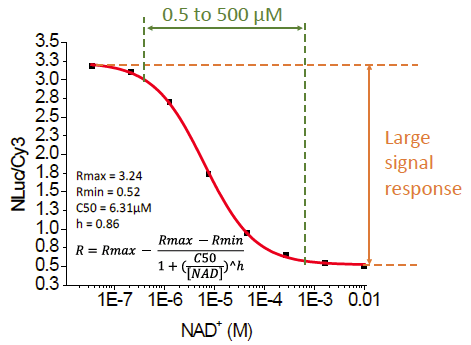
Performance of NAD+ biosensor

1 241029142253634

The sensor emission spectra at different NAD+ concentrations
1 240Q21FU2142

Detection range

1 240Q21FUXA

NAD+ concentration detected by biosensor and LC-MS correlates very well

Performance of NAD+ biosensor

1 241029141541b5
1 240Q21F642137