Have you ever lost a word mid-sentence, walked into a room and forgotten why, or struggled to recall a familiar name? As the years go by, those brain blips seem to come more often. Scientists have been trying to understand why cognitive decline happens at all, and a study published in Nature Aging on August 19, 2025 points to a possible culprit hiding in the hippocampus: a protein called ferritin light chain 1, or FTL1.
The researchers found that FTL1 levels rise with age and disrupt the delicate balance of iron inside neurons, which in turn damages synapses and drives cognitive decline. Lowering FTL1, or supplementing with NADH, was enough to reverse much of that damage in mice. The finding adds a new piece to the puzzle of how the brain ages, and how cognitive decline might one day be slowed.
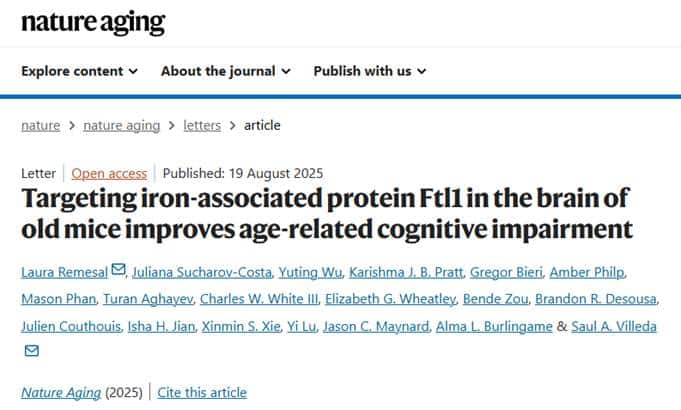
(Source: Nature Aging, 2025)
Part 01: A “Memory Killer” Hiding in the Hippocampus
The hippocampus is the brain’s information hub for learning and memory. Neurons there pass signals from one to the next through synapses, the small bridges that store and retrieve what we experience. As the brain ages, those bridges tend to weaken, and cognitive decline creeps in.
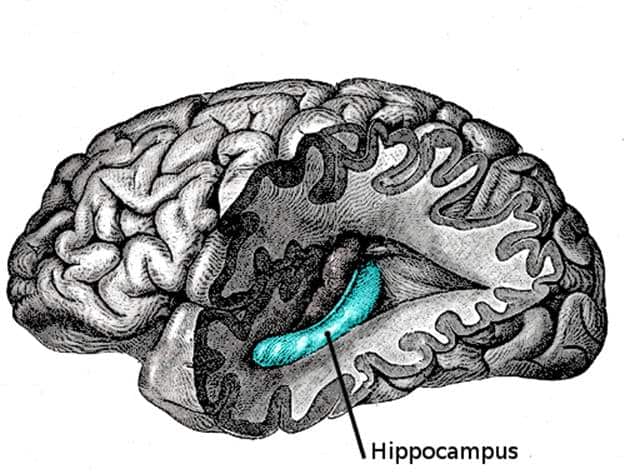
(Source: Wikipedia, 2026)
Through transcriptomic and proteomic analysis, the research team found that aged mice had markedly higher levels of FTL1 inside hippocampal neurons, and the higher the FTL1, the worse the mice performed on maze navigation and novel object recognition tasks. In other words, FTL1 and cognition moved in opposite directions, with FTL1 tracking closely with cognitive decline.
Under normal conditions, FTL1 acts as a kind of iron housekeeper. It binds and stores iron, keeping the cell’s iron economy stable. In the aged brain, that housekeeper appears to lose its grip, and the consequences ripple outward.
Part 02: The Iron Imbalance Cascade
To test what FTL1 actually does, the researchers forced young mice to overexpress FTL1 in their hippocampal neurons. The result was striking. Young mice with elevated FTL1 began to act like old mice. They got lost in mazes and lost interest in new objects. Looking closer, the team saw that excess FTL1 had thrown the neurons’ iron metabolism off balance. Ferric iron (Fe3+) climbed, while ferrous iron (Fe2+) dropped, shifting the cells’ iron oxidation state.
That shift directly damaged the synapses. Both excitatory and inhibitory synapse numbers fell sharply, as if someone had snipped a large number of the wires running through the information hub. Communication between neurons slowed, and cognitive decline followed.
Part 03: Turning Down FTL1 Reverses Cognitive Decline in the Aging Brain
If too much FTL1 drives cognitive decline, could reducing it have the opposite effect? The team used gene editing and RNA interference to dial FTL1 down in the hippocampi of aged mice. The result looked like a partial reboot. Synapse numbers recovered, neuronal connections grew dense again, and on behavioral tests the old mice recognized new objects and remembered maze routes with the ease of much younger animals.
Deeper analysis pointed to energy metabolism as a key piece of the puzzle. Excess FTL1 suppresses mitochondrial function, leaving neurons short on ATP, the cell’s energy currency. When FTL1 was reduced, mitochondria recovered their output, neurons got the energy they needed, and cognitive decline began to reverse. The data suggest that restoring metabolic supply to aging neurons is part of why cognition rebounds.
Part 04: NADH Steps In to Counter FTL1
The same study showed that NADH, the reduced form of coenzyme 1, can partially offset the harm done by excess FTL1. When young mice engineered to overexpress FTL1 were given NADH, their synaptic structure and cognitive performance improved significantly.
NADH is thought to help through several overlapping routes. Beyond restoring mitochondrial ATP production, the molecule supports dopamine and other neurotransmitter synthesis, acts as an antioxidant, and participates in redox signaling that affects blood flow. In short, NADH touches several of the same pathways that FTL1 disrupts.
A separate line of human evidence adds context. A randomized, double-blind, placebo-controlled study enrolled 26 patients with Alzheimer’s disease and gave them 10 mg of oral NADH daily. After six months, the NADH group showed no evidence of progressive cognitive deterioration on the Mattis Dementia Rating Scale and scored significantly higher than the placebo group (p < 0.05), with the largest gains in verbal fluency and visual-constructional ability. The trial did not reverse established cognitive decline, and the cohort was small, but it remains one of the few placebo-controlled trials of oral NADH in this population, and it has not been overturned by later work.

Part 05: Choosing the Right NADH Matters
While gene therapy targeting FTL1 still belongs to the future, NADH is already available as a dietary supplement with a 30-year track record in European and U.S. markets, and a growing body of evidence for its role in supporting cellular energy and healthy aging.
The catch is stability. NADH carries high energy and strong antioxidant activity, which makes it fragile. Heat, light, moisture, oxygen, and stomach acid can all knock it out. Ordinary tablets and capsules, unless specially protected, can lose potency on the shelf or break down before absorption, leaving very little active NADH available to the body.
Researchers have worked on this problem for decades. Beginning with George Birkmayer, often described as the father of NADH application, several generations of scientists have refined stabilization techniques. Moreover, the U.S. company CELFULL (marketed as Celfavor NADH) developed a sustained-release microsphere form of NADH designed to survive stomach acid and remain active in the body. The technology is covered by invention patents in the United States, Canada, Australia, China, Japan, South Korea, and Hong Kong.
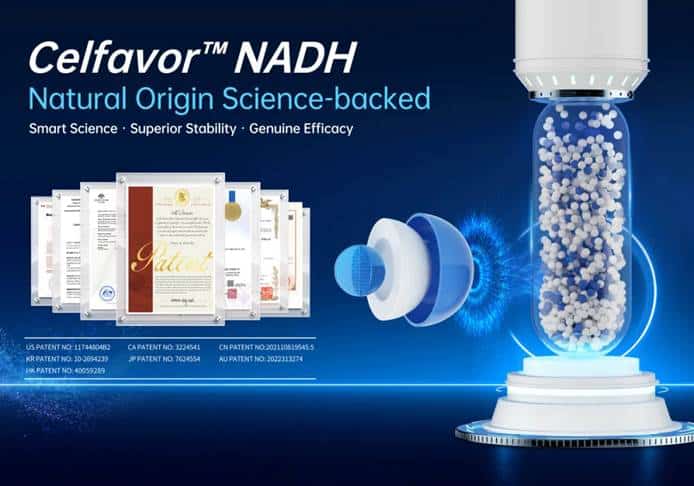
(Celfavor™ NADH microspheres)
The claimed advantages of this format include better shelf stability, improved survival through the acidic environment of the stomach, higher bioavailability, and easier formulation with other ingredients. These are product claims from the manufacturer and have not been independently verified in head-to-head human trials.
Part 06: The Cognitive Decline Takeaway
Slowing brain aging is not a single switch. Diet, movement, sleep, stress, environment, and targeted nutritional support all play a role in how fast cognitive decline progresses. As researchers continue to map the biology of the aging brain, identifying proteins like FTL1 and the metabolic pathways they disrupt brings us closer to a future where cognitive decline is not an inevitable part of getting older. Stable, bioavailable NADH is one piece of that picture, alongside the everyday habits that keep neurons well fueled.
References
Remesal, L., Sucharov-Costa, J., Wu, Y., Pratt, K. J. B., Bieri, G., Philp, A., Phan, M., Aghayev, T., White, C. W., Wheatley, E. G., Zou, B., Desousa, B. R., Couthouis, J., Jian, I. H., Xie, X. S., Lu, Y., Maynard, J. C., Burlingame, A. L., & Villeda, S. A. (2025). Targeting iron-associated protein Ftl1 in the brain of old mice improves age-related cognitive impairment. Nature Aging, 5(10), 1957–1969. https://www.nature.com/articles/s43587-025-00940-z
Demarin, V., Podobnik Sarkanji, S., Storga-Tomic, D., & Kay, G. (2004). Treatment of Alzheimer’s disease with stabilized oral nicotinamide adenine dinucleotide: a randomized, double-blind study. Drugs Under Experimental and Clinical Research, 30(1), 27–33. https://pubmed.ncbi.nlm.nih.gov/15134388/
Disclaimer These statements have not been evaluated by the Food and Drug Administration. This product is not intended to diagnose, treat, cure, or prevent any disease.