01 The Lifespan-Healthspan Gap
Immune balance, not stronger immunity, may hold the key to living longer and healthier. As life expectancy rises worldwide, the gap between how long we live and how long we stay healthy keeps widening.
According to 2024 CDC data, U.S. life expectancy reached 79.0 years, with women averaging 81.4 and men 76.5. In Japan, life expectancy exceeds 85 years. Yet people spend an average of 8 to 10 years in poor health during late life. The codes for living long and living well do not necessarily reside in social metrics alone. They appear to favor certain families, with longevity clustering across generations. Scientists point to longevity genes as the likely driver, with immune balance emerging as a central theme.
02 A Multinational Longevity Gene Study

A multinational research team led by Leiden University Medical Centre studied multigenerational long-lived families. The team analyzed 212 sibships where multiple generations reached exceptional ages, comparing their genetic data against ordinary nonagenarians.

Through whole-genome screening, they identified four genomic regions strongly associated with longevity. Within these regions, they prioritized 12 rare protein-altering variants across seven candidate genes: NUP210L, SLC27A3, CD1A, cGAS, IBTK, RARS2, and SH2D3A. The standout finding was a missense variant in the cGAS gene, designated rs200818241. This variant appeared in two unrelated long-lived families and is extremely rare in the general population.
03 cGAS: The Immune Balance Switch
The cGAS gene produces a protein that functions as a DNA sensor within cells. Under normal conditions, cGAS detects abnormal DNA, such as fragments from viral infections or cellular damage, and activates an inflammatory response. This response helps clear damaged cells and fight pathogens, protecting overall health.
With age, however, damaged cellular debris accumulates. cGAS continues to detect this debris and triggers a persistent, low-grade inflammatory response. Scientists refer to this as chronic low-grade inflammation, sometimes called inflammaging. This ongoing silent inflammation contributes to hypertension, cognitive decline, joint deterioration, and cellular senescence, gradually eroding organ function throughout the body.
Rather than eliminating cGAS function entirely, the longevity variant reduces protein stability. This dampens the cGAS-STING signaling pathway, a key route through which cells detect DNA damage and trigger inflammation. The result is a moderated inflammatory response that still preserves the basic ability to detect threats and mount immune responses when genuinely needed.
04 Immune Balance, Not Stronger Immunity
The longevity-associated cGAS variant offers a compelling model. Most people carry two standard copies of the cGAS gene. Variant carriers possess a missense mutation that reduces protein function in at least one copy, effectively lowering the inflammatory response without eliminating it entirely.
This means their bodies maintain enough immune capacity to respond to infections and repair tissue damage while avoiding the chronic overactivation that drives age-related disease. Cell experiments confirmed that cells carrying the cGAS variant aged more slowly, with significantly fewer senescent cells accumulating over time. Mouse cell models confirmed that this anti-inflammatory effect extends across mammalian biology, reinforcing the evolutionary significance of this mechanism.
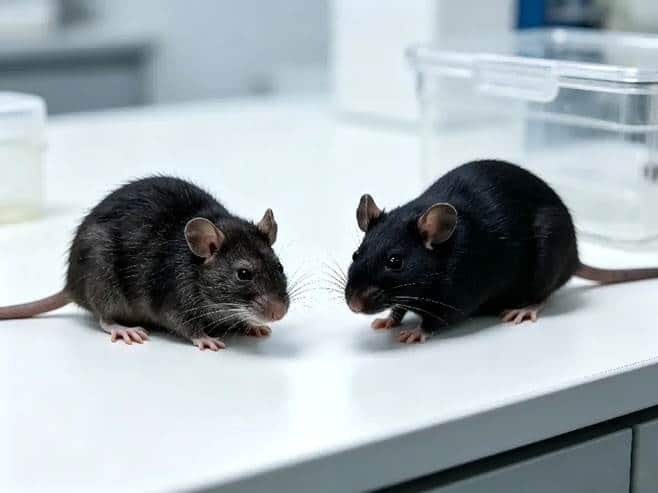
This finding reshapes how we think about longevity. The goal is not a stronger immune system. It is immune balance. Families that pass down longevity genes are not transmitting immortality. They are passing along a genetic template that suppresses chronic inflammation, potentially delaying age-related diseases by over a decade and extending healthspan alongside lifespan.
05 Practical Steps Toward Immune Balance
The practical significance of this research extends beyond genetics. Pharmaceutical companies are developing mild inflammation-modulating therapies that could simulate the effect of this natural gene variant without altering human DNA, offering a potential route to immune balance through medication.
Lifestyle Approaches to Immune Balance
Even without rare longevity variants, lifestyle choices can help replicate part of this protective effect. An anti-inflammatory dietary pattern, such as the MIND or Mediterranean diet, emphasizes leafy greens, berries, nuts, whole grains, and fatty fish while reducing red meat, fried foods, and refined sugars. Regular sleep, stress management, and moderate physical activity also help lower baseline inflammation levels, supporting immune balance through daily habits that anyone can adopt.
Drug Development for Immune Balance
Several research groups are investigating compounds that gently modulate the cGAS-STING pathway. The aim is to reduce chronic inflammation without suppressing the acute immune responses needed for infection defense. If successful, these therapies could offer a pharmacological approach to healthy aging, bringing the benefits of rare longevity genes to a broader population.
06 Limitations and Future Directions
The study has clear limitations. The research remains at the cellular level, with no long-term animal lifespan studies yet conducted. The roles of the other 11 rare gene variants also await deeper exploration. Additionally, this study was published as a preprint on bioRxiv and has not yet undergone peer review.
Despite these caveats, the research provides the first clear evidence that fine-tuning the body’s inflammation switch represents a core pathway to healthy aging. The takeaway is straightforward: immune balance, rather than immune strength, may define the future of longevity science.
References
Putter P C, Guan D, Gehrmann T, et al. Rare longevity-associated variants, including a reduced-function mutation in cGAS, identified in multigenerational long-lived families[J]. bioRxiv, 2025: 2025.12.04.689698.
https://www.biorxiv.org/content/10.64898/2025.12.04.689698v1
https://www.cdc.gov/nchs/fastats/life-expectancy.htm
Disclaimer
These statements have not been evaluated by the Food and Drug Administration. This product is not intended to diagnose, treat, cure, or prevent any disease.