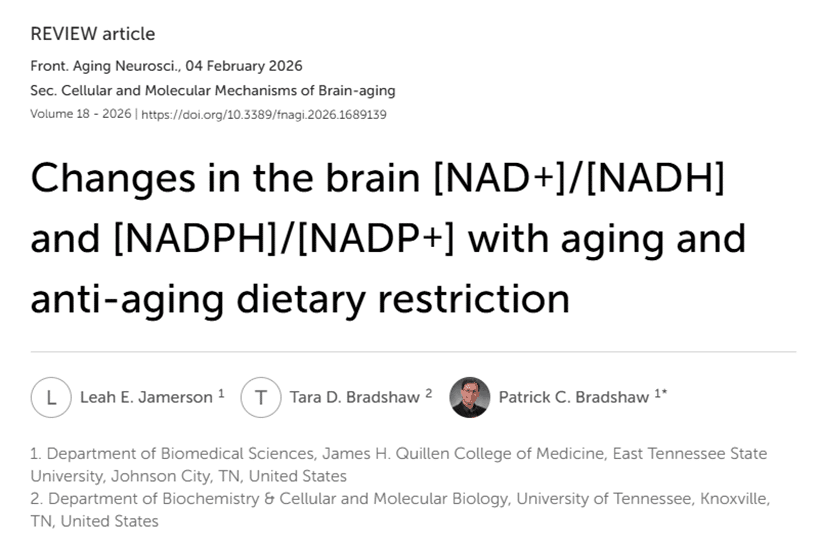
NADH/NAD+ ratio acts as the core biological switch that controls brain aging speed, cognitive decline, and neuronal metabolic health. A groundbreaking 2026 study in Frontiers in Aging Neuroscience unveils how the NADH/NAD+ ratio and NADPH/NADP+ redox balance shape brain aging, while explaining the real differences between fasting and keto diet anti-aging mechanisms for precise cognitive protection.
1. Brain Aging Core Mechanism: How NADH/NAD+ Ratio Imbalance Triggers Cognitive Decline
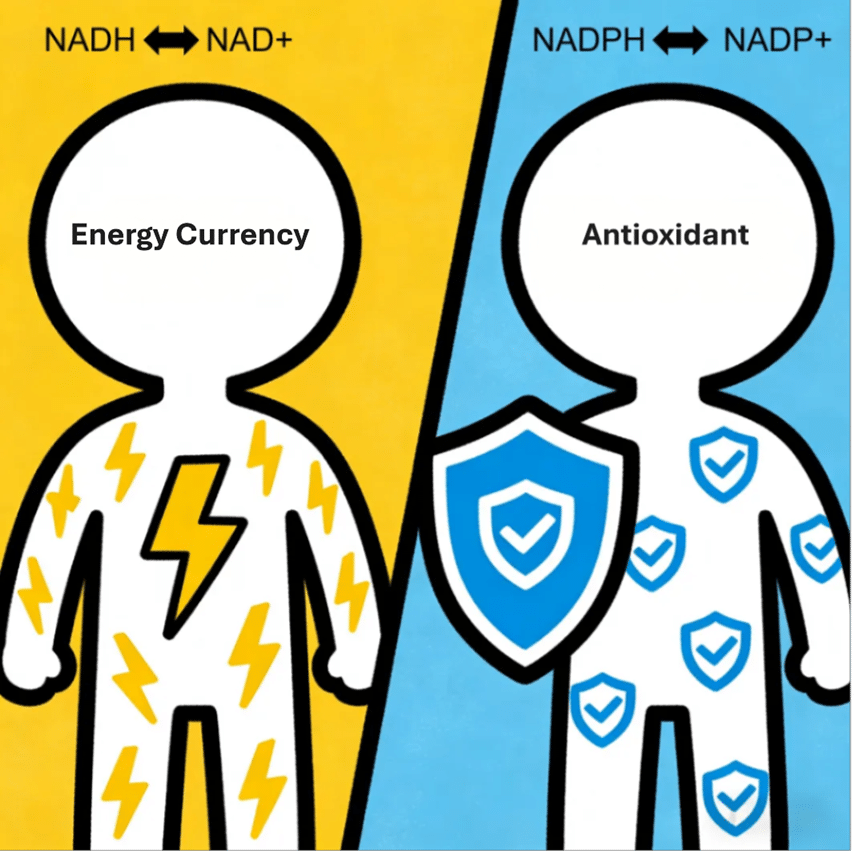
Cellular redox homeostasis dominated by the NADH/NAD+ ratio is the fundamental determinant of brain cell metabolic efficiency and antioxidant defense capacity. The mutual conversion between NAD+ and NADH supports ATP synthesis, which fuels all neuronal activities. Meanwhile, their phosphorylated derivatives NADPH and NADP+ undertake core antioxidant functions, resisting neuronal oxidative stress and damage accumulation.
Scientific redox aging theory confirms that brain aging is essentially a pathological state of redox ratio imbalance. The NAD(H) system regulates more than 300 key cellular metabolic reactions, while the NADP(H) system controls nearly 100 physiological processes. Once their proportional balance collapses, brain cell energy metabolism disorders and antioxidant capacity decline inevitably occur, accelerating brain functional aging.
Notably, the redox aging mechanism varies significantly across species and even mouse strains. In humans and C57BL/6N mice, brain cytoplasmicNADH/NAD+ ratio shifts oxidatively with age, resulting in insufficient energy supply and weakened neuroprotection. In contrast, C57BL/6J mice present a reductive redox shift in the brain and exhibit longer lifespan, strongly proving that precise redox ratio balance directly correlates with brain aging speed and longevity.
2. Fasting vs. Keto Diet: How Each Modulates the Brain NADH/NAD+ Ratio
Fasting and ketogenic diets are two mainstream dietary anti-aging methods, but their mechanisms of regulating brain aging are completely different, precisely due to their divergent modulation of the NADH/NAD+ ratio and NADPH/NADP+ redox balance.
Fasting and long-term calorie restriction create a systemic anti-aging metabolic state for the brain. Both short-term fasting (3–24 hours) and sustained calorie restriction induce a moderate reductive shift in human and mouse brain tissues, stabilizing cytoplasmic and mitochondrial NADH/NAD+ ratio and NADPH/NADP+ balance. Similar to regular system maintenance for overloaded brain cells, fasting activates AMPK and SIRT protein anti-aging pathways, inhibits excess fatty acid synthesis, boosts fatty acid β-oxidation, reduces invalid energy consumption, and reserves sufficient NADPH antioxidant resources. The periodic redox switching triggered by intermittent fasting also effectively resists neuronal mitochondrial aging, laying a solid scientific foundation for its classic anti-aging status.
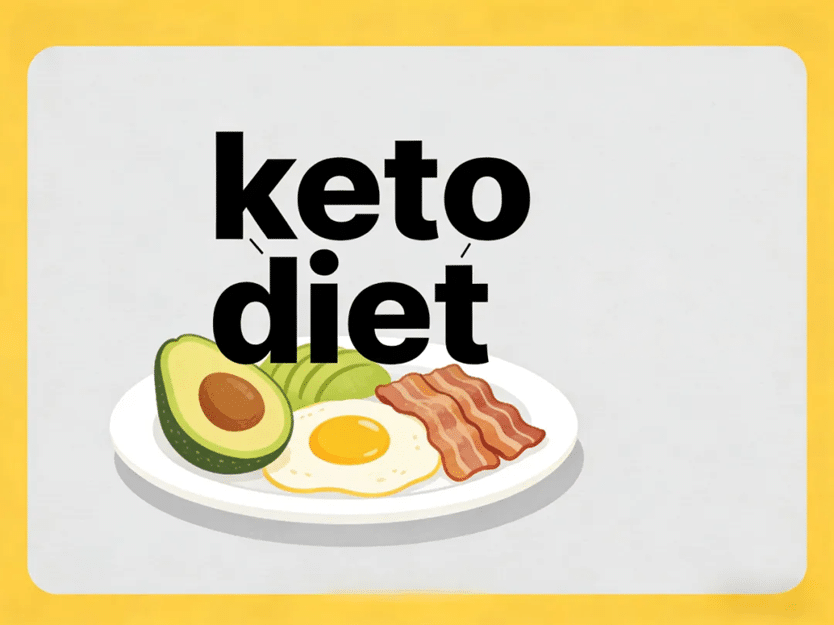
Different from universal fasting regulation, ketogenic diets and ketone ester supplementation present compartment-specific redox regulation and are not suitable for all groups. The keto diet induces an oxidative shift in the cytoplasmicNADH/NAD+ ratio in the cerebral cortex and hippocampus, while causing a reductive shift in hippocampal mitochondria. This difference stems from distinct ketone body concentrations: fasting can elevate plasma β-hydroxybutyrate levels 5–20 times, whereas the ketogenic diet only increases them 0.4–2 times, leading to different regulatory effects on insulin and glucagon secretion.
Therefore, the ketogenic diet is only effective for specific groups such as Alzheimer’s high-risk populations and model mice, rather than a universal brain anti-aging solution. Blind keto dieting may disrupt overall brain redox balance and fail to achieve anti-aging goals.
3. Astrocytes: Stabilizing NADH/NAD+ Ratio to Defend Brain Homeostasis
Astrocytes, the key supportive cells in the brain, are critical maintainers of neuronal health and redox balance, serving as the core defense line to stabilize the brain’s NADH/NAD+ ratio. Unlike fragile neurons, astrocytes moderately express malic enzyme 1 (ME1) and lactate dehydrogenase (LDH), forming a reverse coupling mechanism between cytoplasmic NADPH/NADP+ and NADH/NAD+ ratio. This unique structure efficiently stabilizes brain redox status and resists aging-related oxidative stress.
Due to low ME1 expression, neurons are more susceptible to redox imbalance and oxidative damage, making them the main victims of brain aging. In contrast, experimental data shows that astrocytes in 18-month-old aged rats have stronger mitochondrial respiratory capacity than those in young 7-month-old rats, endowing them excellent anti-aging adaptability. This important discovery indicates that targeted regulation of astrocyte metabolic characteristics and redox balance will become a new direction for precise brain anti-aging intervention in the future.
4. Practical Anti-Aging Tips: Adjust NADH/NAD+ Ratio for Long-Term Brain Health
Complicated anti-aging regimens are unnecessary; daily fine adjustments targeting the NADH/NAD+ ratio can effectively delay brain aging and maintain cognitive function.
Intermittent fasting is the most accessible and efficient method. Adopting the classic 16:8 fasting method 1–2 times a week enables regular metabolic switching of brain cells, stably maintaining redox balance without excessive dietary restriction or physical burden.
Reasonable nutrient supplementation assists redox balance regulation. Scientific NADH supplementation corrects the abnormal oxidative redox shift of aging brain cells, expands intracellular NAD metabolic pools, and dual-supports neuronal energy production and antioxidant defense. Natural cysteine (abundant in eggs, lean meat, and beans) restores mitochondrial NADH levels in aging neurons, protects mitochondrial function through H₂S signaling, and further optimizes the brain’s NADH/NAD+ ratio.
5. Key Conclusion: NADH/NAD+ Ratio Balance Defines Brain Aging Speed
This 2026 frontier study subverts conventional cognition: brain aging is not an irreversible natural decline, but a pathological state of continuous imbalance of NADH/NAD+ and NADPH/NADP+ redox ratios. Periodic metabolic maintenance via fasting, endogenous balance protection by astrocytes, and targeted nutrient supplementation can all regulate these core cellular “energy switches” to reverse sub-health aging states.
Efficient brain anti-aging does not rely on complex strategies or expensive products. Sustained stabilization of brain redox balance through scientific dietary habits and moderate intermittent fasting is the safest and most effective long-term cognitive protection solution. With further in-depth research on brain redox regulatory networks, more precise and personalized anti-aging interventions will be developed in the future, bringing new breakthroughs for delaying brain aging and protecting cognitive health.
It is crucial to emphasize that brain anti-aging pursues redox balance rather than single substance over-supplementation. Excessive intake of NADPH or related nutrients will trigger inflammatory reactions and break metabolic stability, accelerating aging instead. Priority should be given to diverse natural dietary intake, with high-quality supplements as auxiliary regulation.
References
amerson L E, Bradshaw T D, Bradshaw P C. Changes in the brain [NAD+]/[NADH] and [NADPH]/[NADP+] with aging and anti-aging dietary restriction[J]. Frontiers in Aging Neuroscience, 2026, 18: 1689139.