1. Dual Identity of NAD: Anti-Aging Star Molecule & Core Immune Regulator
NAD (nicotinamide adenine dinucleotide) is widely celebrated as a classic anti-aging coenzyme that governs cellular metabolism and aging progression. Beyond anti-aging benefits, NAD acts as a ubiquitous redox cofactor in all human cells, dynamically switching between oxidized NAD+ and reduced NADH states to transfer electrons and provide sustained energy for all cellular life activities.
For CD4+ T cells—the core command cells that coordinate the body’s entire immune response—NAD is an indispensable metabolic foundation. When pathogens invade the body, CD4+ T cells are rapidly activated, triggering a sharp surge in glycolysis and mitochondrial metabolic levels. This intense immune activation process relies entirely on NAD to support energy supply and biological synthesis. Meanwhile, NAD+ serves as a key substrate for SIRT and PARP enzymes, assisting immune cells in DNA repair and survival maintenance.
Its phosphorylated derivative NADP builds the core cellular antioxidant defense system. NADP maintains the activity of reduced glutathione, efficiently scavenging excess reactive oxygen species (ROS) in cells. It prevents oxidative damage to immune cells and avoids excessive immune activation and unnecessary inflammatory responses caused by ROS accumulation. In short, the activation intensity, immune defense function, and survival cycle of CD4+ T cells all depend on precise NAD immune balance regulation.
2. Core Research Breakthrough: NRK1 Dominates Cytoplasmic NAD Synthesis for Immune Control
This landmark study focuses on NRK1 (nicotinamide riboside kinase 1), a key rate-limiting enzyme in the NAD salvage synthesis pathway. NRK1 is responsible for converting the NAD precursor nicotinamide riboside (NR) into NMN, further driving endogenous NAD synthesis. Through systematic human primary cell experiments and genetically modified mouse model verification, the team summarized three core rules of NRK1-mediated NAD immune balance regulation.
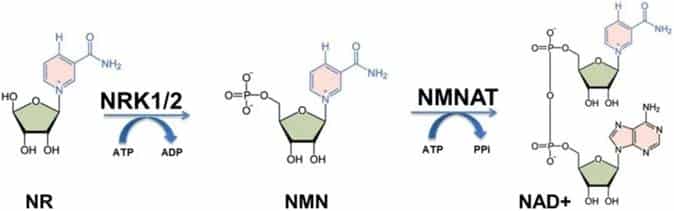
First, NRK1 is the exclusive core driver of NAD synthesis in activated CD4+ T cells. NRK1 is barely expressed in resting immune cells; once immune activation is triggered, the CD3/CD28 signaling pathway rapidly upregulates NRK1 expression, reaching its peak at 48 hours after activation. Exogenous NR supplementation can significantly boost intracellular NAD levels in activated CD4+ T cells. More importantly, NRK1 can independently compensate for metabolic defects even when other NAD synthesis pathways are blocked, ensuring basic NAD supply for immune cells.
Second, NRK1 regulates independent cytoplasmic NAD-NADP metabolic pools. Different from mitochondrial NAD that focuses on energy production, the NAD synthesized by NRK1 is exclusively localized in the cell cytoplasm. Activated immune cells will simultaneously upregulate cytoplasmic NMNAT1 and NADK1 enzymes, quickly converting NRK1-derived NAD into NADP, forming a dedicated cytoplasmic antioxidant and immune regulatory pool that is completely isolated from mitochondrial energy metabolism.
Third, cytoplasmic NAD acts as a precise immune “brake” to avoid excessive inflammation. The cytoplasmic NADP produced by the NRK1 pathway efficiently eliminates ROS—the core signaling molecule that triggers CD4+ T-cell overactivation and pro-inflammatory factor secretion. Sufficient NADP neutralizes intracellular ROS, inhibits excessive proliferation of CD4+ T cells, and reduces the release of pro-inflammatory cytokines IFN-γ and TNF-α. In the absence of NRK1 function, intracellular NADP levels drop sharply, ROS accumulates massively, and overactive NFAT signaling drives CD4+ T cells into a hyper-inflammatory state, triggering systemic unnecessary inflammation.
Notably, NAD immune balance regulation presents an obvious threshold effect: NRK1 can maintain basic immune cell activation when other metabolic pathways fail, ensuring normal pathogen defense; when the immune system is fully functional, it restrains excessive immune responses, always keeping immunity in a balanced state of “effective but not excessive”.
3. In Vivo Verification: NRK1-NAD Axis Determines Immune Defense Efficiency
The research team further verified the real immune regulatory effect of the NRK1-NAD axis through in vivo infection experiments. The study constructed mice with CD4+ T-cell-specific NRK1 gene deletion, and conducted infection experiments with Cryptococcus and influenza A virus respectively.
Experimental data showed that although the initial activation of CD4+ T cells in NRK1-deficient mice was normal, unchecked ROS accumulation caused severe DNA damage to immune cells, leading to a sharp reduction in surviving effector CD4+ T cells in infected tissues. In contrast, immune cell survival in non-infected lymphoid tissues was not affected, confirming that the NRK1-NAD pathway specifically protects immune cells at pathogen infection sites.
This defect directly led to the collapse of the mice’s immune defense ability. Cryptococcus-infected mice showed a sharp increase in fungal load in the brain, aggravating fungal infection damage. Influenza A-infected mice experienced more severe symptoms, significant weight loss, and a drastic reduction in functional immune cells in draining lymph nodes. These results fully prove that cytoplasmic NAD regulation is the key to balancing pathogen clearance and inflammatory tissue damage.
4. New Definition of NAD: Precision Immune Balancer Beyond Anti-Aging
For a long time, NAD has only been defined as an anti-aging and metabolic regulatory molecule. This 2026 Nature Communications study redefines NAD’s core value: it is a precision immune balancer that maintains dual immune homeostasis.
On the one hand, it maintains metabolic-immune balance. The mitochondrial NAD pool provides sufficient energy for immune cell activation and pathogen clearance; the cytoplasmic NAD-NADP pool prevents metabolic overload from triggering immune disorder and excessive inflammation. On the other hand, it maintains infection-defense balance, enabling the immune system to efficiently clear invading pathogens while avoiding inflammatory collateral damage to healthy tissues.
The study emphasizes that immune health does not depend on unlimited immune activation, but on precise dynamic balance. The subcellular localization of NAD determines its functional differentiation: cytoplasmic NAD calibrates immune response intensity, while mitochondrial NAD drives immune energy metabolism, and the two coordinate to achieve refined immune regulation.
5. Clinical Prospect: Targeting NAD Metabolism to Treat Immune Diseases
This breakthrough discovery brings new targeted intervention ideas for immune-related diseases. For autoimmune diseases such as rheumatoid arthritis and psoriasis, which are caused by CD4+ T-cell hyperactivity and persistent excessive inflammation, activating the NRK1 pathway or supplementing NR can elevate cytoplasmic NAD/NADP levels, scavenge excess ROS, inhibit hyperactive immune responses, and relieve chronic inflammatory damage.
For chronic infections and low immune function, appropriate mild regulation of NRK1 activity can sustain efficient CD4+ T-cell immune activity, enhance pathogen defense capabilities, and improve immune deficiency status. In addition, this pathway provides a new solution for refractory fungal infections such as cryptococcal meningitis; targeted activation of the NRK1-NAD axis can improve the survival rate of brain immune cells and enhance local anti-infection immunity.
Although the current research is in the preclinical stage, it greatly expands the application boundary of NAD. NAD is no longer just an anti-aging molecule, but a core precision regulator of human immune homeostasis.
6. Conclusion: Balanced Immunity, Powered by Precise NAD Regulation
Strong immunity does not equal healthy immunity. Excessively activated immune responses will trigger inflammation, autoimmune damage, and tissue lesions, while insufficient immunity leads to infection susceptibility. As a hidden core regulatory factor in immune cells, NAD relies on the cytoplasmic NRK1-NAD-NADP metabolic axis to precisely control CD4+ T-cell activity, balance immune defense and inflammatory responses, and guard long-term immune health.
This study reveals the deep logic of NAD immune regulation, providing a scientific basis for standardized NAD supplementation to regulate immunity and a new direction for the development of immune-balancing nutritional interventions and clinical targeted therapies.
References
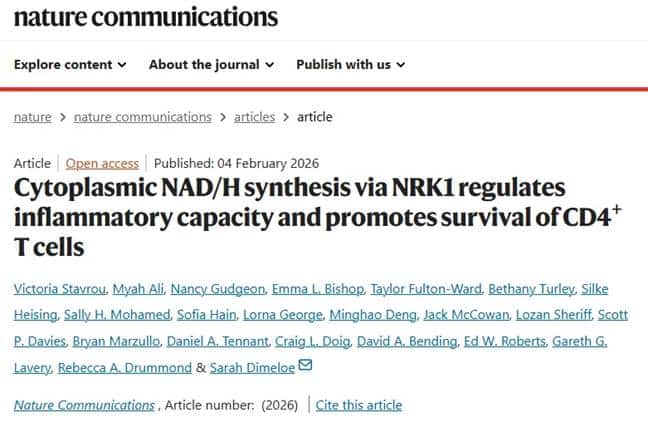
Stavrou V, Ali M, Gudgeon N, et al. Cytoplasmic NAD/H synthesis via NRK1 regulates inflammatory capacity and promotes survival of CD4+ T cells. Nature Communications. 2026.